Rise of the Dragon

Also Known As
- ライズ オブ ザ ドラゴン ~ブレイド・ハンター・ミステリー~ - Japanese spelling
Genres
Overview
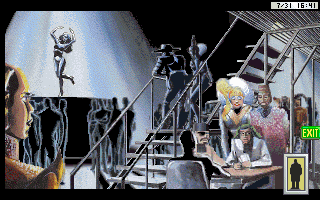
Rise of the Dragon is a cyberpunk style adventure game developed by Dynamix and published by Sierra On-Line initially for IBM computers and later for other systems including the Amiga, Macintosh, and SEGA CD. In the game players take on the role of Blade Hunter in a futuristic version of Los Angeles; initially tasked with investigating the death of the mayor's daughter, a more sinister plot is soon uncovered which threatest the entire city. Rise of the Dragon is among a handfull of adventure games developed by Dynamix, a company more commonly known for simulations or action games; other adventures they developed include Heart of China and The Adventures of Willy Beamish.
Story and Gameplay
Rise of the Dragon takes place in the year 2053 in Los Angeles; former L.A.P.D. officer William ‘Blade’ Hunter is tasked by the cities mayor to track down those responsible for the death of his daughter, Chandra. Chandra was found to have died from a deadly, new drug known as MTZ; while the origin of the drug is unknown, the dealer is identified as Chen Lu. Blade soon finds Chen dead, however, but during the investigation finds clues that lead to the Chinese Mafia led by Deng Hwang as the drug source. With the help of his girlfriend Karyn (who happens to work in the city records department) Blade is able to locate Hwang, also known as the dragon Bahumat. His plan is to poison the city with large quantities of MTZ being manufactured and then dump it into the city reservoir. By eventually infiltrating Hwang's headquarters, Blade is able to stop the plot and save the day (naturally)!
The game uses a point-and-click interface with a first person perspective from Blade's point of view. By moving the cursor around the screen, players can move from location to location, pick up or use items, talk with characters, and more. Items can be dragged and dropped around the screen to interact with them, and the cursor will change shape when hovering over areas where certain actions are possible. Hand drawn, digitized artwork is utilized throughout, and a small amount of digitized speech is even included in the introduction sequence. The story and artwork are intended to have a grittier, more adult-oriented feel to them, especially when compared with most games parent company Sierra was publishing at the time.
The game takes place in real time with a clock showed in the upper part of the screen. As time passes, events will take place regardless of whether or not the player has taken an action. A VCR style interface also allows players to fast forward in time if they wish to. Some actions, such as traveling to far locations, will eat up time even faster; in order to solve the puzzles in the allotted time, players may need to plan accordingly. Some puzzles also have multiple solutions and characters remember conversations; annoying a character may lead them to not help out later on so it's occasionally possible to get into an unwinnable situation in the game, however there are often other ways forward through the story.
Finally, there are several arcade sequences found throughout the game. These are in the form of either a side-scrolling scenario where players guide Blade through various obstacles and need to shoot or avoid enemies, or a first person scene where players need to shoot all of the bad guys before they fire too many shots that hit Blade. The difficulty level of the arcade sequences can be adjusted in the game settings, and it's also possible to skip them after failing to complete them too many times.
While most versions of the game are essentially the same, the SEGA CD version additionally adds full voiceovers throughout not found in any other version. It also doesn't have an option to bypass arcade sequences and due to fewer colors and differences in the SEGA CD color palette the converted graphics appear to have a greenish tint when compared with other versions.

Credits
|
Platform:
IBM PC/Compatibles
|
||
| Designer and Director: | Jeff Tunnell | |
| Art Director: | Randy Dersham | |
| Conceptual Art and Characters: | Robert Caracol | |
| Game Development System: | Richard Rayl, Dariusz Lukaszuk, Kevin Ryan | |
| Artists: | Brian Hahn, Mark Brenneman | |
| Programmers: | Louie McCrady, Richard Rayl, Kevin Ryan, Nels Bruckner, Dariusz Lukaszuk | |
| Arcade Programming: | Darek Lukaszuk | |
| Audio Director: | Alan McKean | |
| Music and Sounds: | Chris Stevens | |
| Original Score: | Don Latarski | |
| Dialogue and Text: | Jerry Luttrell, Dave Selle | |
| Original Story: | Dave Selle, Jeff Tunnell | |
| Quality Assurance Manager: | Forrest Walker | |
| Documentation Design, Layout and Writing by: | Jerry Luttrell | |
| Special Thanks to: | Mark Peasley, David Selle | |
| In memory of: | Laura Palmer | |
Marketing
Product catalogs, magazines, flyers, or other documentation Rise of the Dragon has appeared in.*Note: If you are unable to see any images in this section, you may have an ad blocker installed that is blocking the thumbnails and/or images.
| Magazine Advertisements |
| Product Catalog Pages |